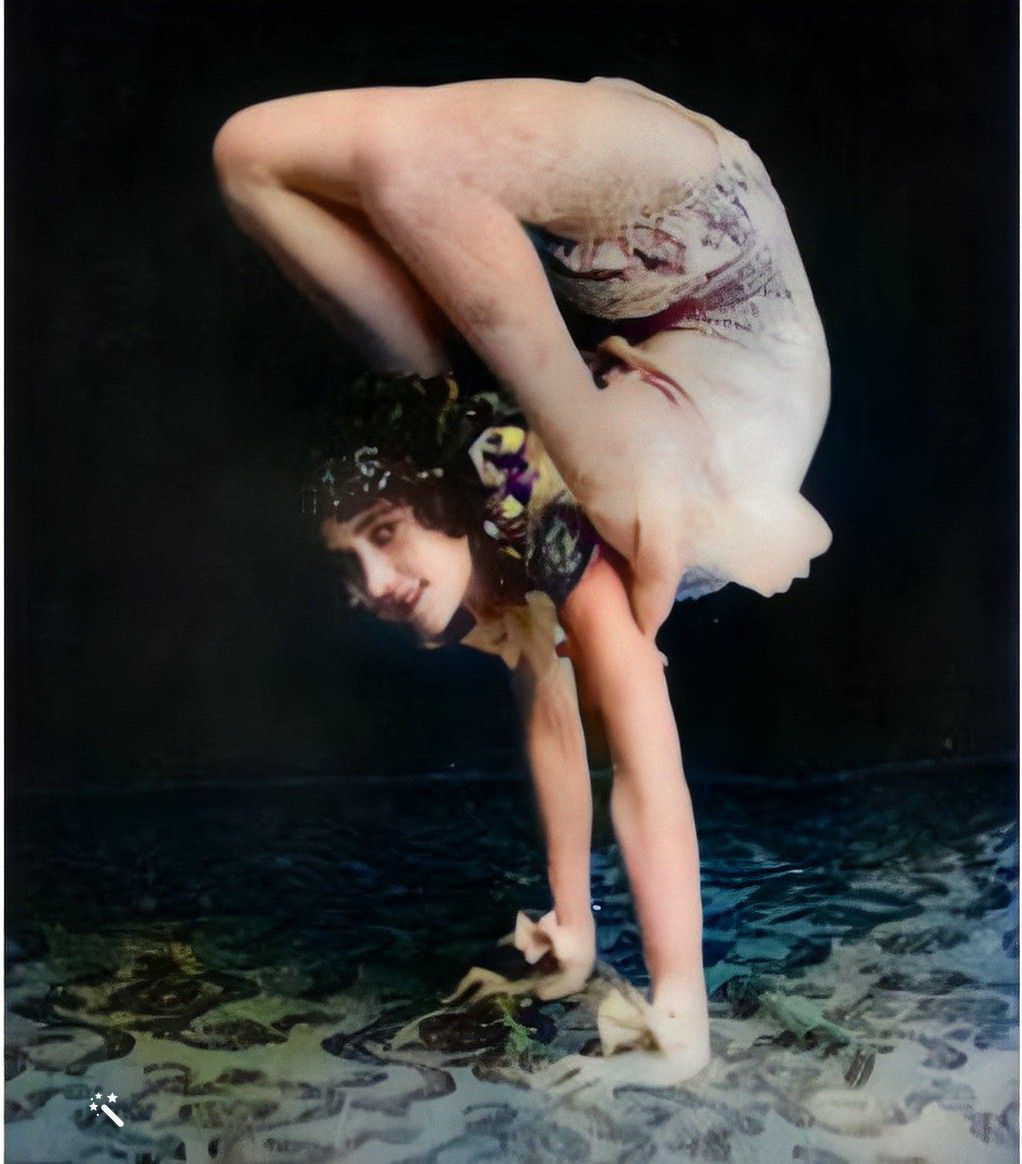
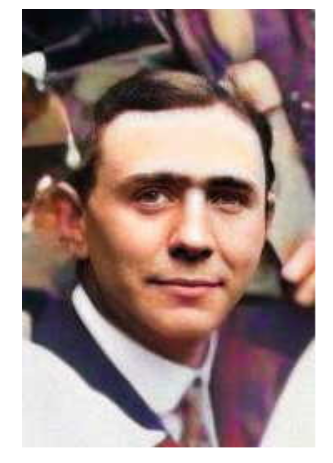
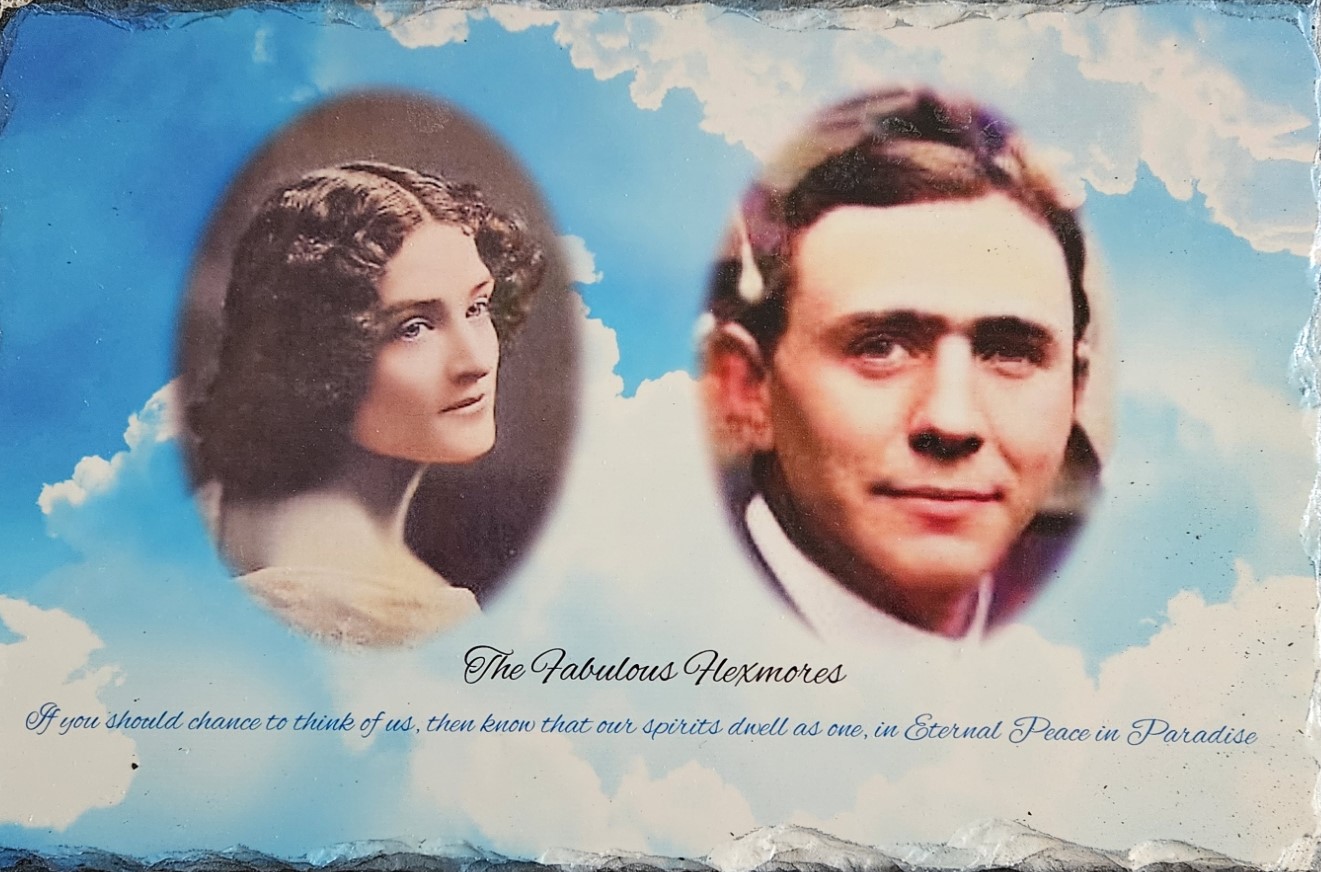
Chapter One of this site tells Richard Flexmore Geatter’s story in the space a chapter allows. This page tells it in full — every record this research has found, every date that still disagrees with another date, and every small, human detail that a five-chapter narrative had no room to keep. He was born in Kennington on September 15th, 1824, and died at 66 Hercules Buildings, Lambeth, on August 20th, 1860, of consumption, not yet thirty-six. In between, he became famous enough that people tried to claim his name while he was still alive to object — and famous enough that strangers went on claiming it for the better part of a century after he no longer could.
A Name Already in the Family
Richard was not the first Flexmore. His father, born Richard Gatter around 1781 — the family’s own surname, with no theatrical “e” and no “Flexmore” attached at birth — had been performing professionally as “Mr Flexmore” since at least April 1811, when a Theatre Royal, York playbill cast him as “Toby Lump” in Rival Rustics, dancing alongside the Giroux family. He appeared at the Sans Pareil Theatre in December 1813, and married Ann Fancourt Pether — herself born at 83 Hercules Buildings, Lambeth, in 1786, decades before her son and grandson would ever live on the same street — at St Anne’s, Liverpool, on March 23rd, 1813, giving his own occupation on the certificate as “Stage Player.” He danced again at the Theatre Royal, Manchester, in November 1827, on a benefit night for Mr Bradbury the clown, and died in March 1837 in Newcastle-under-Lyme, Staffordshire — twenty-three years before the son who would make the name famous, and, per Richard’s own 1849 marriage certificate, already named there as “dec’d” and a “Dancing Master” by trade.
Richard had two known siblings: Isabella Flexmore Gatter (b. abt 1816, baptised Liverpool April 2nd, 1817 — explaining why the family was in Liverpool for that baptism, ahead of their move to Lambeth) and Mary Ann Flexmore (b. abt 1822, d. February 12th, 1830, buried at St Mary, Lambeth, aged about eight; her original burial register entry, No. 600, survives). A later ambiguity in the family’s own records — a “Mary Ann Flexmore Gatter,” born about 1849 in Lambeth, who married Edward George Andrews on December 27th, 1868 — is now resolved: she was Isabella’s daughter, Richard’s niece, not his own child. Richard and Francisca are not known to have had a surviving child of their own.
Eight Years Old on the Victoria Stage
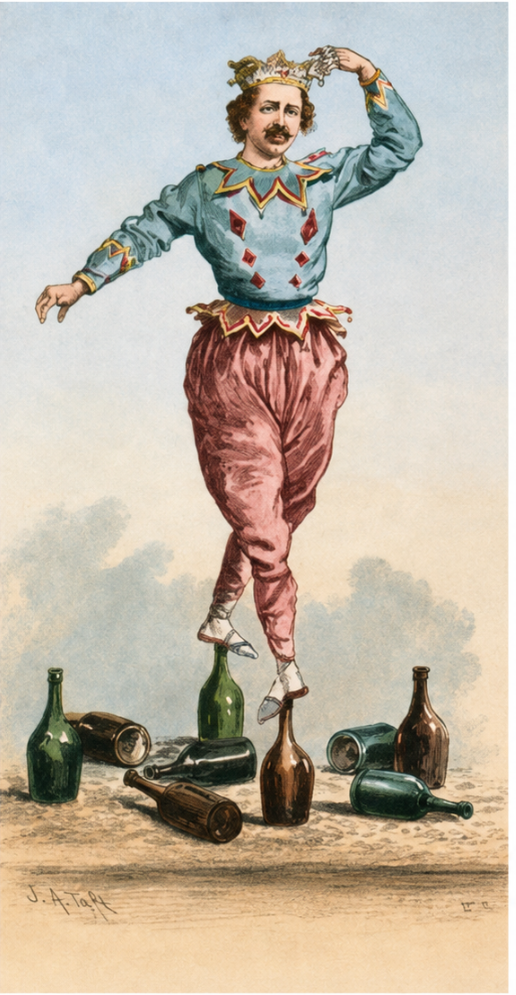
Richard began his own career at the Victoria Theatre around eight years old, in 1832, trained — per the only named early teacher on record for him — “by a Mr Frampton.” By 1835 he was shadow-dancing in The Man in the Moon at a small Chelsea theatre; by 1844 he had his first documented Clown role, at the Grecian Saloon. His breakthrough came at the Olympic under T. D. Davenport, 1845–46, and it was soon after, at the Princess’s Theatre, that his signature gift emerged: precise, affectionate imitations of the great ballerinas of the day — Taglioni, Carlotta Grisi, Fanny Cerrito, Jules Perrot — danced, by every account, with a comic clown’s body doing a prima donna’s steps.
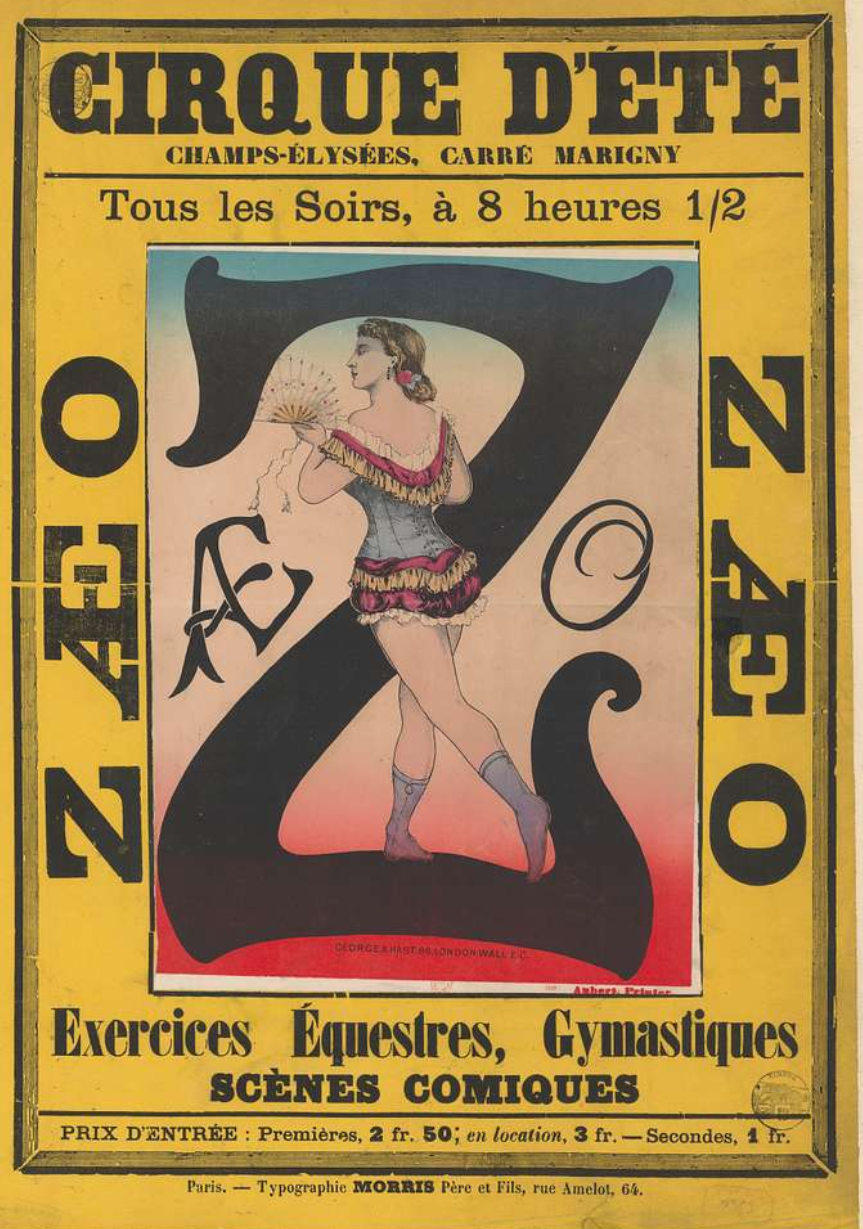
A lithograph found among the researcher's own family archive gives that Princess’s Theatre period its first specific date, ballet, and named partner: “Mad’lle Auriol & Mr Flexmore, in the favourite Pas de la Truandaise, in the Ballet of Esmeralda, played at the Princess’s Theatre, produced by Mr Flexmore, April 24th, 1848.” This is the earliest documented performance found so far between Richard and his future wife — over fifteen months before their wedding, and while Francisca was still, per her own marriage certificate the following year, a minor. La Esmeralda was Jules Perrot’s own 1844 ballet, so Richard was here working directly with the Perrot repertoire in the same decade Perrot himself was active — and the credit “produced by Mr Flexmore” suggests he had a hand in staging the piece, not merely performing in it.
He went on to the Adelphi (1852–53), took a monkey role at the Surrey (1857), and played the Wolf transforming into Clown in Little Red Riding Hood at Covent Garden (1858–59). His final pantomime was Jack-in-the-Box, Drury Lane, Christmas 1859 — eight months before his death.
Married Into Another Dynasty
On July 28th, 1849, at St Mary’s, Lambeth, Richard married Francisca Christophosa Auriol, daughter of the celebrated French clown and circus performer Jean-Baptiste Auriol. The original certificate (St Mary, Lambeth, No. 240) survives, and it adds real detail beyond what any family tree alone would give: Richard’s own occupation is recorded as “Dancing Master,” not merely “Comedian” or “Pantomimist” as later census returns would have it; his residence is given as 66 Hercules Buildings; and Francisca, a minor at the time, is recorded residing at 93 Hercules Buildings, with her own father named directly — “Jean Baptiste Auriol, Equestrian.” The officiant was Andrew Magee, Curate, and the witnesses included Francisca’s own pre-marriage signature, “F. C. Auriol.”
Francisca was a performer of real standing in her own right; the 1851 census records her occupation, in her own household, as “Professor of Dancing.” Seven weeks after the wedding, the couple appeared together on a bill at the Queen’s Theatre, Hull, their “Last Appearances” before moving on — billed, tellingly, as “Madlle. Auriol & Mr. Flexmore.” She kept her own stage name. She had earned it too, and it was normal practice for a performer of her own reputation to do so.
A Clown’s Salary — An Extended Network
Richard’s connection to his father-in-law’s continental circus business went beyond family occasion. A bail-court report from May 5th, 1860 — “A Clown’s Salary” — records Jean Baptiste Auriol suing a rival equestrian clown, performing as “Macaire” (real name Clarke), for breach of a touring engagement contract. Auriol’s circus, playing Bradford and short a first-rate clown, had “telegraphed to Mr Flexmore, the celebrated London clown, and son-in-law to Mr Auriol, to send word who can come.” Richard put Auriol in touch with Clarke, who initially agreed terms — twelve pounds a week, plus benefit and travelling expenses — before reneging for a better offer at Manchester. The jury found for Auriol; one hundred and seventy-nine pounds awarded, with immediate execution granted. It shows Richard, only months before his own death, acting as a working fixer inside his father-in-law’s business, not merely a son-in-law by name.
Sixty-Six Hercules Buildings
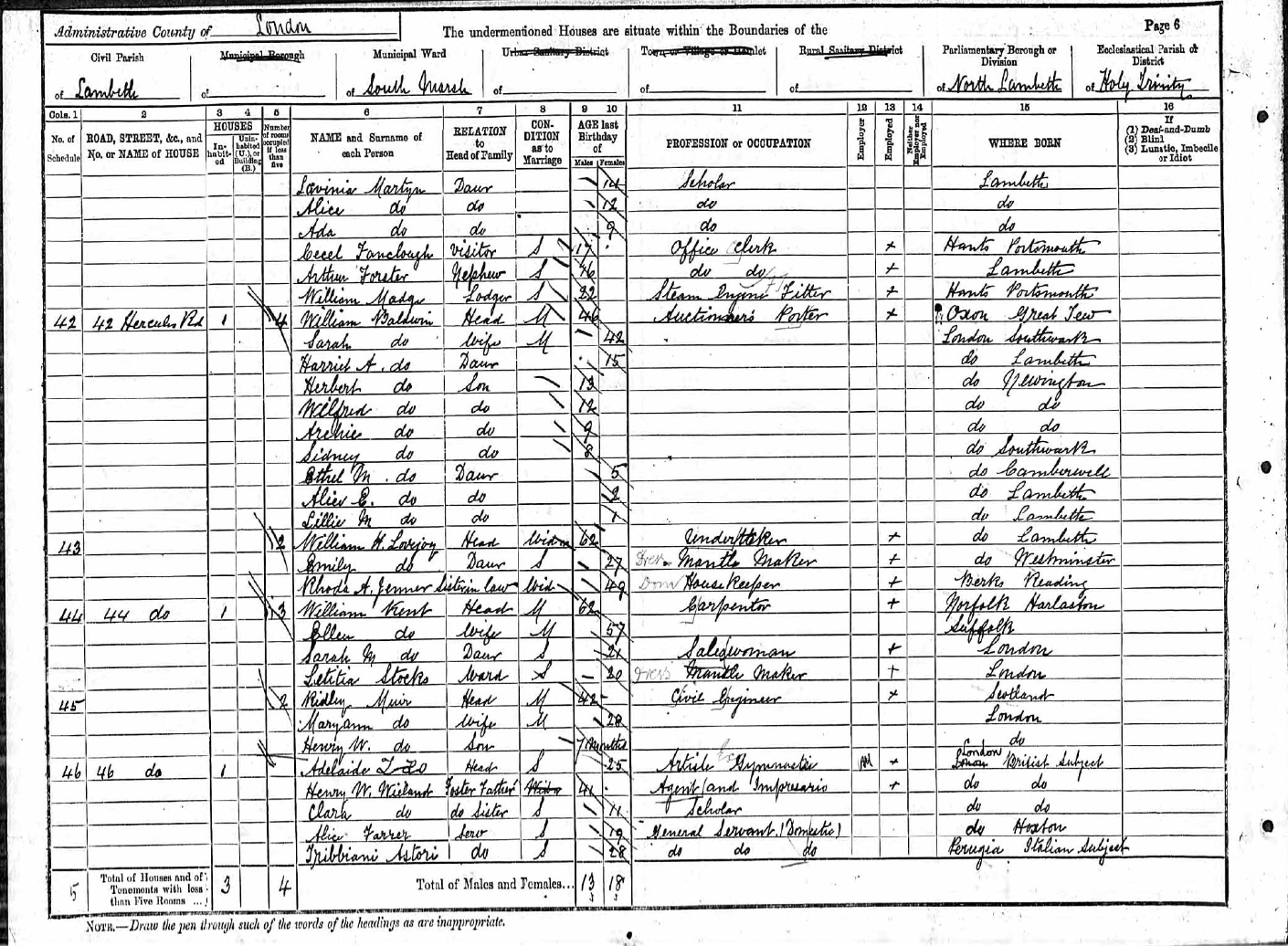
By the night of the 1851 census, Richard, Francisca, and Richard’s widowed mother Ann were all living together at 66 Hercules Buildings, Lambeth, with Richard recorded as head of household, aged 25, occupation “Comedian/Pantomimist.” A newspaper item the following year — “Flexmore Back Garden Menagerie” — places him two doors along, at No. 60, suggesting the family shifted within the same street. Either way, Richard’s presence on Hercules Buildings ran for the better part of a decade, right through to his death at No. 66 in 1860 — the same Lambeth street, later renamed Hercules Road, where, decades afterward, the impresario Henry “Harry” Wieland is documented living and working (see Chapter Two). Close enough, geographically, to matter to that question. Not yet close enough, chronologically, to prove it: no Wieland residence record earlier than the 1891 census has yet turned up.
Two Pupils Who Remembered Him
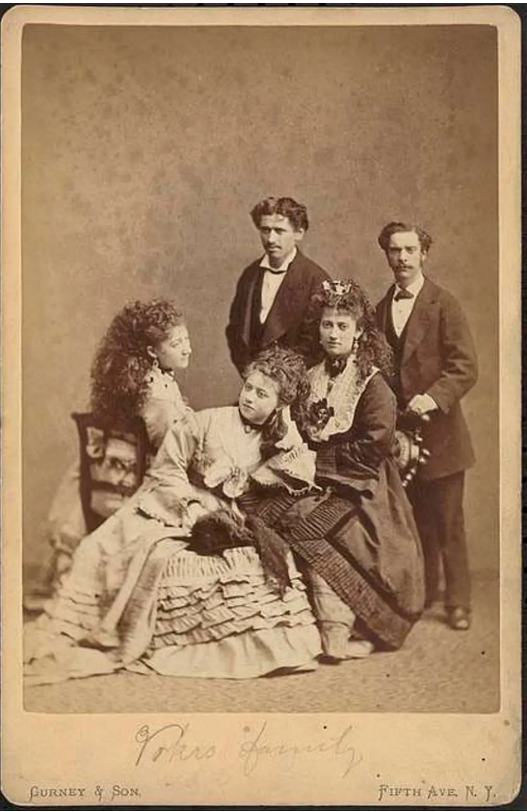
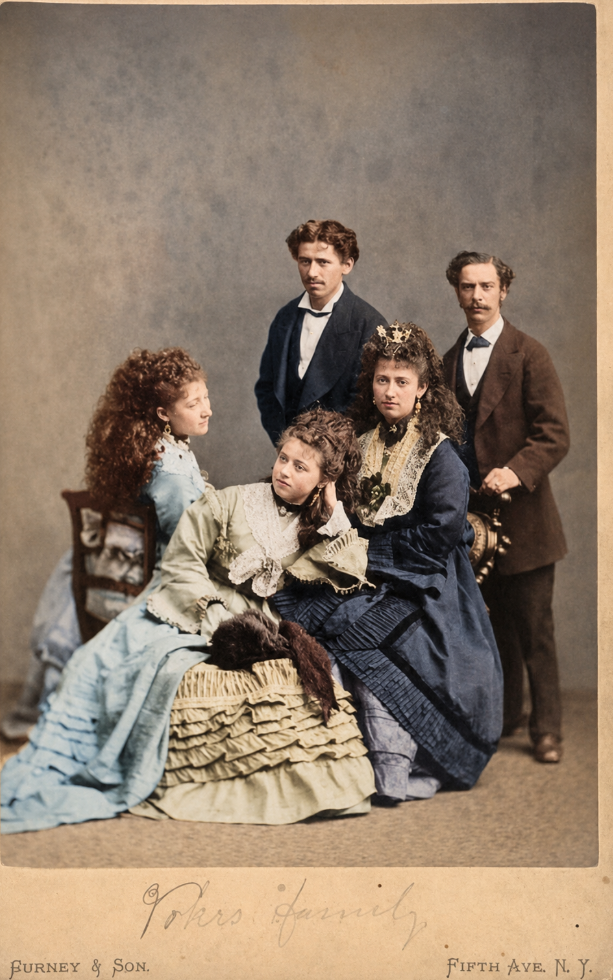
Two performers who trained under Richard as children recalled him by name, decades later, entirely independently of one another. Fred Vokes, interviewed in 1886, put it simply:
“‘Flexmore,’ says Mr Vokes, ‘was the greatest man that ever gave me a lesson in dancing. He gave me three lessons, and died.’”
Fred Vokes, interview, 1886
His sister Jessie Vokes, in her own 1884 obituary, was independently remembered as having been “taught the art of dancing by the late Mr Flexmore” — and, per Fred’s own account, performed “Florence in The Dumb Savoyard, with Mr Flexmore” specifically. Set alongside his own named teacher (“a Mr Frampton”) and his likely pupil Charles Lauri — the subject of the 1867 “Wieland and Flexmore school” review explored in Chapter Two — these two names make Richard, by the end of his short life, a teacher in his own right as much as a performer.
“Mr. Flexmore and His Progeny”
Even in his own lifetime, people tried to borrow the name. In March 1854, Richard wrote to the Morning Post to publicly disown a young man of eighteen or nineteen who had defrauded the Drury Lane manager E. T. Smith of £10 by posing as “the son of Mr. Flexmore, the clown.”
“Sir,—I have to apologise to you for intruding myself upon your notice; but the usual courtesy you are in the habit of extending to every one when it lies in your power to correct a grievance, will, I hope, be also shown to me. A short time since a lad, between 18 and 19 years of age, was charged by Mr. E. T. Smith, the worthy manager of the Theatre Royal, Drury-lane, with attempting to defraud him of the sum of 10l., by representing himself as the son of Mr. Flexmore, the clown. Sir, I am Mr. Flexmore, the clown, and am surely the party best calculated to decide as to the identity of the boy. The circumstances of the case have already appeared in several daily journals, unfortunately for me, more than once; and my peace of mind is to a considerable extent invaded with the belief that many people may imagine that the youth in question is really descended from me. Being myself under 28 years of age, I was certainly a bachelor at the early period of 10. I undoubtedly have had many sons presented to me during the performance of the various pantomimes in which I have been engaged — all of whom have been christened with the kind encouragement of the public — but this unlooked-for offspring having, by the conduct alluded to, evinced symptoms of rather a disreputable tendency, I must respectfully decline to father him. Trusting, sir, that you will sympathise with me in this melancholy case, which will be the means of relieving me from the constant inquiries I receive regarding my prodigal son and heir, I remain, &c., Richard Flexmore. March 15, 1854.”
Richard Flexmore, letter to the Morning Post, March 15th, 1854 — quoted here in full
It is a small, funny, slightly sad episode, and it is also, in miniature, the exact story this entire site tells: the moment a stage name becomes valuable enough — strangers start to borrow it. Richard lived to see it happen once, to his evident irritation. Within a few decades it had happened many times over — not as fraud, but as tribute, homage, and the same kind of honest professional inheritance his own father had once claimed for himself.
The Final Season
Richard’s health failed quickly at the end. In 1859, fellow clown Harry Payne — playing a bear in the same production — had to step into the Clown role mid-performance because Flexmore had collapsed. Two further claims from this final period remain genuinely unverified, and are recorded here rather than quietly dropped or asserted as fact: a note appended to one source states Richard “performed a fifty-night marathon at the original Teatro Circo, Madrid,” founded by the Irish horse-tamer and impresario Thomas Price; and a 1929 newspaper account of a lion escaping a travelling menagerie in Charmouth, Dorset, names an assistant manager whose surname reads ambiguously as either “Plexmore” or “Flexmore” — sixty-nine years after Richard’s death, far too late and too thin a lead to connect to him with any confidence. Neither claim has a primary source of its own yet.
Richard died at 66 Hercules Buildings on August 20th, 1860, of consumption, not yet thirty-six years old.
Ten Days After
On August 30th, 1860, Francisca wrote to The Era in her own voice, correcting a report that a benefit had been arranged for her without her knowledge:
“Sir,—Having seen in your journal of last week a letter from Mr Boleno, purposing a benefit for myself and mother-in-law, I beg to say that no such thing was sanctioned, nor was the question put to me. If so, I should have abandoned such a proposal at once. Happily I have no need of any assistance at present. As regards my mother-in-law, I have settled an allowance that will keep her comfortably during her lifetime. Respecting the erection of a Memorial at Kensal-green to the memory of my dear lamented husband, several gentlemen have kindly called upon me concerning it, I need only add that I should feel most proud if any of my poor husband’s sincere friends would take part in such an undertaking. … I am, Sir, your obedient servant, Franciska Flexmore, 66, Hercules-buildings, Lambeth, August 30.”
Francisca Auriol Flexmore, letter to The Era, August 30th, 1860
The letter confirms three things at once: that she signed publicly as “Franciska Flexmore,” not “Auriol”; that she had already, independently, arranged financial support for Ann Fancourt Pether without needing public charity; and that the Kensal Green memorial was already being organised by “several gentlemen” of Richard’s own profession within ten days of his death, with her blessing but not, on this evidence, her own initiative. The “Mr Boleno” she names is not a stray reference — the same name appears fourteen years later on a tribute plate alongside Richard’s own portrait (see below), confirming him as a real, contemporary, professionally-connected clown.
The Monument
Richard was buried a week after his death, on August 27th, 1860, at All Souls, Kensal Green, beneath a monument funded by public subscription — designed by Richard Wynn Keene, the deaf theatrical costumier and mechanist who worked under the professional name “Dykwynkyn,” and completed in 1862.
Keene was born in Birmingham on December 9th, 1809, and was — per the Museum of Music History’s own account of his life — “afflicted with total deafness from an early period of his life.” He trained first as a sculptor, then spent a decade in industry and invention: in 1838 he co-patented, with John Danforth Greenwood, a hard ornamental plaster known as Keene’s cement, and from 1841 to 1851 ran a terracotta manufacturing business supplying architectural features and mosaic work. Sometime in the 1850s he moved into the theatre full-time, designing for seventeen consecutive pantomimes at Drury Lane between 1852 and 1879 — responsible, in the words of one contemporary account, for “all the hundreds of Masks, Devices, Properties and Dresses” the productions required, and celebrated for grotesque, inventive imagery. It was in this capacity, in 1862, that he designed Richard’s own monument: the single point at which Keene’s long career and this family’s story cross. In 1876, at the age of sixty-seven, his reputation carried him further still — Bayreuth commissioned him to build the mechanical animals for the original production of Wagner’s Ring: a dragon for Fafner, a bear, a magpie, ravens, and sacrificial rams for Fricka. The dragon alone cost £500 and, having lost a piece of its neck in transit, reportedly never worked as intended.
Keene did not end well. He died on November 28th, 1887, paralysed and bedridden, in a workhouse infirmary — his burial at Brookwood Cemetery paid for by a theatrical charity, in a grave that remains unmarked to this day. A man who spent thirty years building the props, monsters, and monuments other people were remembered by has, a century and a half later, none of his own. Chapter One of the five-chapter narrative tells his fuller story still, including the researcher’s own reading of how “Dykwynkyn” likely sounded in the mouth of a man who had been totally deaf since childhood, and why that reading — offered as belief, not a documented finding — matters to how his chosen name should be heard.
A later description of the grave, filed among family papers as “Flexmore Monument 1883,” gives a vivid account of the stonework:
“…the tomb of poor Flexmore, the comic dancer… French artists will tell you that his talent in this branch of art was superior to any that had ever been seen… The tambourine and dancing slippers, with the balls that he would toss and catch again while whirling round the stage with the greatest velocity, are carved in stone above his name.”
“Flexmore Monument,” filed 1883
The same piece gives Richard’s age at death as twenty-eight — sharply at odds with his documented age of thirty-five, and almost certainly an error in that specific article rather than a correction to the established record, but recorded here rather than silently dropped. It also describes Jean-Baptiste Auriol as having set aside his own “contempt for England and the English” to consent to his only daughter’s marriage — a vivid characterisation, whatever its precise accuracy.
Mr. Chapman’s Hand
Keene furnished the design; another man’s hands actually cut the stone. The Era’s report of the monument’s completion — published Sunday, February 9th, 1862 — is explicit on the point: “The design, furnished by Mr. Richard Wynn Keene, an artist so familiar to the public under his punning pseudonym of Dykwynkyn, has been ably executed by Mr. John Chapman, Sculptor, 23, East-place, Walworth.” Beyond that one credit line, nothing further about Chapman has yet come to light — no other commission, no other trace of the workshop at East-place. This site records what the source actually says and no more.
Correction to the record
The Era’s own reporting is not consistent on Chapman’s exact address. An earlier notice, published two weeks before the report quoted above — Sunday, January 26th, 1862 — corrects itself in print: “The sculptor’s address is not ‘Walworth’ as stated last week, but Mr. John Chapman, 23, East-place, Kennington-road, Lambeth.” Yet the February 9th report, quoted above, reverts to “23, East-place, Walworth” regardless. Both notices agree on the house number and street — 23, East-place — and differ only on the surrounding district: Walworth, or Kennington-road, Lambeth, two adjoining South London localities whose boundary Victorian newspapers did not always observe precisely. This site records both readings rather than silently picking one.
The same report describes the finished monument in some detail: a double plinth surmounting a pedestal with base and cornice moulding, nine feet six inches in total height, its upper angles carved with four masked heads representing Tragedy and Comedy on one side and Music and Poetry on the other, festoons of oak and ivy bound with ribbons running between them, and, on the front, a tambourine, walking-stick, and pair of fancy slippers carved in relief around an urn entwined with a laurel wreath — the small, specific props of Richard’s own trade, rendered permanent in stone. The inscription itself reads:
In Memory of
RICHARD FLEXMORE GATTER,
who died August 20th, 1860.
“A fellow of infinite jest.”—SHAKSPERE.
The completion itself was not entirely smooth: the Committee had originally intended to place the monument on Tuesday, February 4th, but as it was being lowered into position the tackle of the machinery gave way, and the work had to be finished the following day. The Era noted that Chapman “properly and honourably finished his contract, to the satisfaction of all present,” and that he had undertaken to carry out the whole of his workmanship at cost price alone.
Six Years On, and a Weathered Stone
In December 1866, a “Mrs. Flexmore Xmas Pudding Fund” collected small weekly and one-off donations — from theatre proprietors, fellow performers, and a theatre company collection — “to buy Mrs Flexmore her Christmas pudding,” describing “the old lady (nearly 90 years of age)” as “not forgotten at this festive season.” This almost certainly means Ann Fancourt Pether rather than Francisca, though “nearly 90” sits oddly against her own established 1786 birth year, which would make her about eighty in 1866 — possibly connected to a separate, already-unresolved discrepancy over her exact age at death.
The researcher's own 2024 photographs of the memorial show a severely weathered, broken-topped stone column; only “RICHARD FLEXMORE…” remains faintly legible on the shaft, with nothing further of the inscription recoverable by inspection alone. It stands, unrestored, as a possible future documentation project — in the same spirit as the Nellie Honeyball grave on the Rise of the Lionesses site.
What Outlasted Him
In December 1874 — fourteen years after his death — an illustrated feature titled “Farewell! Some Famous Clowns” placed Richard’s own portrait, in a purple costume, among ten named clowns considered essential to the art, alongside Joseph Grimaldi himself. A higher-resolution copy of the same plate, found later in the researcher's own Ancestry gallery, corrected an earlier misreading of two neighbouring names: the portrait beside Richard’s is Charles Lauri — almost certainly the same Charles Lauri of the 1867 “Wieland and Flexmore school” review, making this a second, independent sighting of the two men associated with each other — and a third portrait, first misread as “Petino,” is in fact Boleno: the same Mr Boleno named in Francisca’s own letter above.
In January 1885 — twenty-five years after Richard’s death — a double act billed as “Thomson and Flexmore, Les Vrai Diables” opened at Astley’s Amphitheatre, London’s most famous circus venue, performing knockabout comedy under a name to which neither performer had any documented blood right. By the time Ellen Mary Ann Dunn adopted the stage name Lily Flexmore in 1896 — the subject of this site’s companion, lilyflexmore.co.uk — “Flexmore” had already been carried, earned, and re-earned many times over. The rest of that story is what the site’s five chapters tell.
A Working Theory: The Flaxmores Who Became Flexmores
The clearest evidence yet found for how thoroughly “Flexmore” outgrew Richard’s own bloodline comes from a family with no documented blood connection to the Geatters at all. Frederick W Flaxman was born in 1846, the son of John Flaxman and Sarah Browne; his own brother, Walter Wallis Flaxman (1849–1863), kept the family’s original spelling. Frederick did not. By 1869, when his eldest son was registered, the family’s name had become Flexmore outright — not a stage alias assumed for a night’s billing, but the surname entered on a birth certificate, and the one his own children carried for the rest of their lives: Frederick C (b. 1869), George A (1870–1957), Florence E (1872–1959), Handel J (1874–1961), Maud Alice (1875–1961), Albert (1879–1880, died in infancy), Evelyn (b. 1879), and Ethel M C (1883–1981).
The family went on to earn the name on stage in its own right. Michael Kilgarriff’s music-hall reference work Sing Us One of the Old Songs records Florence, George, and Handel (billed as “Hank” or “Hanky”) performing together as the Flexmore Trio, or Flexmore Three, their sister Maud appearing solo in “Angels of the Night,” and their father Fred himself performing a solo turn, “Britannia’s Brave Defenders.” The same entry separately notes “another Fred Flexmore,” who died on August 29th, 1928, aged 65, described there as a nephew of Richard Flexmore (1824–60) — raising the tantalising possibility of an actual family link between the two Flexmore lines, though it is not yet clear from this source alone whether that nephew is this same Frederick or a distinct relative, and no further record of the connection has yet been found.
The researcher’s own working theory, offered here as conjecture rather than a settled finding: Frederick, born a Flaxman fourteen years before Richard’s death in 1860, appears to have taken up the name only afterward — sometime in the nine years between Richard’s death and his own eldest son’s 1869 birth. If that reading holds, it fits the pattern the rest of this chapter already tells: the name was taken up after Richard was gone, not while he was still alive to object to it, leaving his own claim to having originated “Flexmore” undisturbed. No direct record of the name change itself — a deed, a notice, an explanation in the family’s own words — has yet turned up.
One further detail from this family is worth setting down, for its own sake rather than for what it proves. Frederick’s son George A Flexmore (1870–1957) married a woman named Mary Ann White, and in June 1897 the couple had a daughter, Lilian Elsie Mary Flexmore, born at 12 Vivian Road, Bethnal Green, to George, a bicycle maker, and his wife. She died five weeks later, on August 9th, 1897, of “want of breast milk” and diarrhoea convulsions, her mother present at the death; her father appears to have registered her birth that same day. A Flexmore married to a White, raising a family in the 1890s, happens by pure coincidence to echo the pairing at the centre of this site’s own companion story — Lily Flexmore and George Ambrose White. There is no connection whatsoever between the two couples. But a life measured in five weeks deserves a line of its own, coincidence or not.
Lilian Elsie Mary Flexmore, rest in Paradise.
The Bloodline Ends, The Name Does Not
Richard and Francisca had no surviving children. Widowed at thirty-one, Francisca did not disappear from the stage: within twelve days a theatrical gossip column reported she had already returned to Paris for a new engagement, “where she has been an immense favourite.” Just over a year later, on August 24th, 1861, she married her own first cousin, Achille Auriol, of Lavaur, Tarn (son of Dominique Auriol and Catherine Raynaud) — not, as one reading of the family tree might suggest, a son of Jean-Baptiste Auriol himself. On September 1st, 1862, she gave birth to a daughter, who died the same day. Francisca herself died within days of the birth — her own death recorded three different ways across three separate sources (September 3rd, September 7th, and October 3rd, 1862), never yet resolved to a single certainty. Mother, child, and, with them, the last direct line of the family that had given the world “Flexmore,” were gone within roughly a fortnight of one another, little more than two years after Richard’s own death. The Geatter bloodline, in the most literal sense, ended there. The name did not.
Two generations gave the world “Flexmore.” Neither left a surviving child to carry it by blood. Nearly everyone who carried it afterward — and this site names dozens of them — carried it because they earned it, not because they inherited it.